Not too long ago, if a brand wanted visibility, the answer was simple: pay for it. Run ads, push them out, hope people click. The bigger the budget, the bigger the reach.
That model still exists, but it’s no longer the whole story. Today, some of the most-watched brand content on TikTok wasn’t boosted with a single ringgit. It earned its views because it was funny, relatable, or perfectly timed to a trend. Visibility on TikTok increasingly comes from content people genuinely want to watch, not just content brands pay to push out.
Here’s why brands are making the shift and what that actually looks like in practice.

Source: Freepik
The Problem with Relying Only on Paid Ads
Paid ads were the standard for digital marketing for a long time, and for good reason. They’re fast, targeted, and measurable. You set a budget, define your audience, and your content gets in front of them.
But over time, a problem crept in: consumers got tired of it.
78% of consumers say they encounter ads on social media more than anywhere else, making it the most saturated channel of all. Users learned to scroll past, skip, or mentally block out anything that looked like an ad. The more you showed the same content, the less it worked and the more expensive it became to get the same results.
On top of that, visibility powered purely by ad spend stops the moment the budget stops. There’s no compounding effect, no shelf life. It’s like a tap, and when you turn it off, the water stops.
How TikTok Shifted Social Media Marketing
TikTok shifted visibility away from follower counts and advertising budgets towards content performance. For brands, that means good content has a real chance of reaching large audiences, even without an established following or significant ad spend.
On most platforms, reach is largely driven by:
- Follower count
- Advertising budget
On TikTok, reach is driven by engagement signals such as:
- Watch time
- Comments
- Shares
- Rewatches
This means content quality and audience engagement matter far more than follower count or ad budget, making TikTok’s algorithm one of the most democratic on any major social platform.
That means a brand with zero followers and no ad budget can still land on millions of For You Pages (FYP) if the content is good enough. Malaysian food reviewers like Jason Chen and Ming Chun are good examples of this. Their popularity wasn’t built on big advertising budgets or celebrity status. It came from consistently creating content that people found honest, informative, and worth watching, exactly the kind of engagement TikTok’s algorithm rewards.
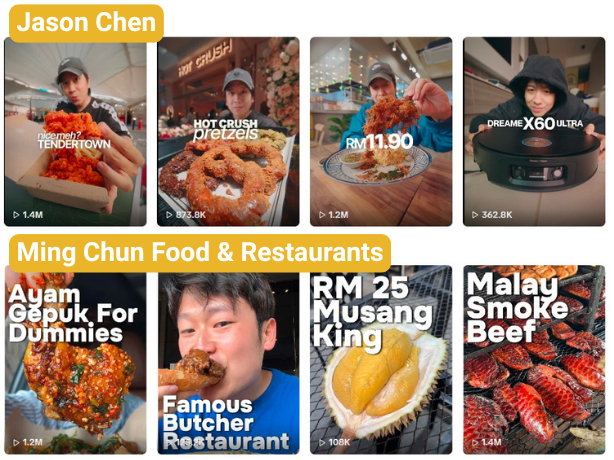 Source: @scaredtodie & @mingchuun on TikTok
The types of content that perform best here aren’t polished brand videos. They’re skits, behind-the-scenes clips, trend participation, creator-style storytelling, and relatable humour. In many cases, lower-production content performs better because it feels more native to the platform. It blends into the feed instead of interrupting it, which makes people more willing to engage with it.
What Makes Organic TikTok Content Work
Organic success on TikTok isn’t accidental. It comes from understanding how the platform rewards content that feels native, timely, and genuinely engaging. Before looking at what brands are doing, it helps to break down the core reasons this type of content performs so well.
1. It Earns Trust, Not Just Views
Based on a GlobalData survey commissioned by TikTok, 67% of consumers use TikTok to discover new brands and products, ranking ahead of Amazon at 57% and even search engines at 35%. That’s not happening because of hard selling. It’s happening because organic content builds familiarity and trust before it asks for anything.
When a brand shows up consistently in your feed through content that entertains or resonates, the relationship feels different from seeing a banner ad for the fifth time that week.
2. It Compounds Over Time
A piece of organic content doesn’t disappear when a campaign ends. It stays on the platform, gets picked up by trending sounds, gets reshared, and can resurface weeks later. Brands that invest in consistent organic posting build compounding brand equity, loyal communities, and a content library that generates reach long after posting.
3. Trends Are Free Distribution
Jumping on a trending sound or format isn’t just fun; it’s strategic. TikTok’s algorithm actively favours content that participates in what’s currently popular. For smaller brands especially, this is a way to access wider reach without spending on it.
In practice, trends work because they allow brands to tap into:
- Existing audience behaviour (what people are already watching and engaging with)
- Algorithmic boosts tied to trending sounds and formats
- Faster visibility without relying on ad spend
- Lower production barriers for content creation
Both international and local brands are already proving this works.
ZUS Coffee uses TikTok to turn everyday café scenarios into relatable, humorous content. By quickly joining trending sounds and reacting to viral moments, the brand stays consistently visible while feeling native to the platform.
Nando’s Malaysia takes a similar approach through lighthearted, story-driven content, including animated episodes inspired by staff experiences. A video of Malaysia Day alone reached over 2.1 million views, showing how consistent storytelling can naturally drive reach.
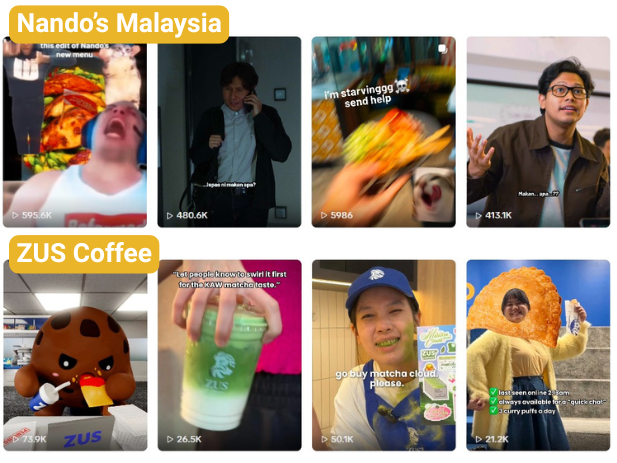 Source: @nandosmy & @zuscoffee on TikTok
But Organic Alone Has Its Limits
Here’s where it’s worth being honest: organic reach on TikTok isn’t as effortless as it used to be. Data shows organic reach has dropped from around 24% to about 10% of total impressions over recent years. The platform is more crowded, competition for attention is higher, and consistency matters more than ever.
Relying solely on organic content means unpredictable reach and slower results, especially when you need a push for a product launch or a major campaign period.
That’s where paid comes back in, but in a smarter role.
The Smarter Play: Organic First, Then Amplify
The most effective strategy isn’t choosing between organic and paid. It’s using organic content as your testing ground, then using paid as your megaphone to scale what already works.
This is where TikTok’s Spark Ads format comes in. Instead of creating content specifically for advertising, Spark Ads let you amplify organic TikTok posts, either your own or user-generated content (UGC) with permission, as paid ads while keeping the original post intact. It looks and feels like native content because it is built on native posts, just with a bigger push behind it.
The practical playbook:
- Post consistently to build a content baseline
- Let organic content run without immediate boosting
- Identify posts with strong engagement signals (watch time, shares, comments)
- Test small budgets on top-performing content
- Scale only what has already proven resonance
You’re not gambling on whether an ad will land; you’re amplifying content that has already shown it works.
TikTok has also reported stronger performance outcomes for Spark Ads compared to standard in-feed ads in multiple case studies, particularly in engagement and conversion efficiency.
What This Means for Brands Today
The shift isn’t really “paid ads are dead.” It’s that the role of paid has changed. Instead of being the main strategy, it’s become a support tool, most effective when it amplifies content that’s already proven itself organically.
For brands navigating this shift, here’s what the smartest players are doing:
- Building a content presence before pushing conversions
- Prioritising humour, relatability, and trend relevance over polished production
- Measuring success through engagement, such as watch time, comments, and shares, not just clicks
- Testing content organically first, then using paid (specifically Spark Ads) to scale what works
- Focusing on building trust and brand personality as a foundation, with conversions as the outcome
The brands winning on TikTok today aren’t necessarily the ones with the biggest budgets. They’re the ones who understand how the platform actually works and create content people genuinely want to see.
Final Thoughts
Marketing on TikTok has rewritten the rules of visibility. Attention isn’t bought the same way it used to be; it’s earned through content that feels real, relevant, and worth a person’s time.
Paid ads haven’t gone anywhere. But when they work best, they’re backing up content that has already earned its audience. That’s the shift, and for brands willing to play the long game, it’s a more sustainable and trust-building way to grow.
Want to build a TikTok content strategy that actually gets your brand seen? Schedule a FREE 1-hour consultation with us now!